Reset. Restart: Libraries Play Vital Role in Healing the Economy
March 23, 2021
Lorensbergs

Dave Gimson, the Business & IP Centre National Network Manager at the British Library, spoke with us about how libraries are ideally positioned to help local businesses survive the recession and to support new entrepreneurial ideas. We talked about the origins and nationwide growth of the BIPC network and its programme of Reset. Restart events for added support during these difficult times.
The original BIPC began in the British Library in 2006. It pulled together a number of free library services around intellectual property and patent searching, industry information reports, company databases and journals. It took inspiration from the Science Industry and Business Library (SIBL) in New York.
The resources are important to startups, existing SMEs and anyone considering setting up a business. People can use the Centre to research their business idea and discuss it with trained staff. With our help, they address the right questions and have help finding the answers. It gives users the skills and information needed to make informed decisions about their businesses.
Our staff are business information experts and we work with external partners too. They provide consultancy on business planning, financing and cashflow, sales skills, grants and funding sources. Together we offer programmes of workshops, webinars, one to one sessions, and inspirational talks.
When the last recession began over 10 years ago, the BIPC was available for anyone to visit, but they would have needed to travel to the British Library site at St Pancras to use its services. It’s developed much greater reach since then, expanding to regional centres throughout the UK, and in the last year in particular, developing a programme of webinars that can be accessed from anywhere in the world.
The regional centres follow the same model as the original, but with each adapting to meet the needs of the local business landscape and startup scene. This started in Newcastle, where we explored how a regional model would work in a public library setting. It was very well received and we started working with a number of other public libraries.
We currently have 13 regional BIPC that are fully operational and aim to establish 20 hubs in total by 2023. The next few are due to be announced in the next couple of months. After that there should be potential to work with yet more public libraries and grow the network even further.
Another way we’re growing is through our hub and spoke approach to expansion. Our regional centres are rolling out operations to more sites, either to libraries within their own authority or within neighbouring authorities. So Nottingham City for example is now working with Nottinghamshire Library service to take it to Mansfield, Sutton-in-Ashfield and other locations. This will mean much greater geographical spread outside of the cities.
The expansion is aiming for a total of 110 centres by 2023, with both core centres and local reach achieved through the public library network. Funding was secured for this last year from HMT and with DCMS support.
The Reset. Restart programme of webinars began in October from the British Library’s BIPC, with regional centres coming on stream with their own programmes in the months following. It’s mainly aimed at existing business owners who need extra support at the moment. We run a series of 10 webinars with our network partners, anyone can access them from anywhere in the country or abroad. Each webinar is followed by smaller group sessions, for example for Q&A follow up.
The programme is mirrored in the regional centres but with their own local twist to suit community needs, respond to local enquiries and fill gaps in provision. For example, there’s a lot of demand in Northamptonshire for more digital marketing guidance, so they’re responding to that by expanding further on this topic.
Regional attendees to the British Library programme can be signposted to a local Reset. Restart service for more webinars, or for more intensive support including one to one time for individual questions, or local networking. Users can dip in and out of the programme depending on topics of interest, although many attend all. It’s all built around the business model canvas and its different sections as a complete business planning tool.
Initially a 6 month programme, Reset. Restart is likely to run for a further 3 months from the British Library and with also many of the regional centres continuing into the summer. It’s been well received, so we’d like to keep it going where possible.
During recessions, those who move quickly can bounce back, they move online, develop new services or take different routes to market. There are lots of positive stories of how businesses can adapt and survive. Our Reset. Restart programme can help them weather the storm until the economy improves. We also stop people pursuing less advisable business ideas which can be equally important, saving them time and money.
Our data shows that with our help 9 in 10 businesses survive the first three years, a statistic which otherwise averages at only 6 in 10. We’re committed to continuing to support our users on the different stages of their business journeys, whether they have found themselves unemployed and are considering turning a business idea into reality, or for existing business owners. Our services help them to increase their turnover and employ more people, so it has a very beneficial effect.
We have a really good reach to diverse audiences, to disadvantaged communities and to those who may be under-represented in business. Female entrepreneurs, people from black, Asian or minority ethnic backgrounds, those with disabilities. You can read more about it in our report Democratising Entrepreneurship.

We’re inclusive in reaching and encouraging people that might not ordinarily have known how to get support for a new business idea. We develop good relationships with our users, to keep them coming back in while they need our help, to support them through the different stages of launching and growing a business. They can research their prospective market, understand consumer behaviour, and the competitive landscape: we can provide the information and help them find the best way forward.
For our Reset. Restart programme specifically, we ‘re on track to have reached over 2500 individual users by the end of March, each of who tend to join 2, 3 or more events of the central programme before participating in some local events too.
People don’t always make the connection between libraries and business support – they’re not aware of the range of services and help on offer. But as an accessible safe space, in the heart of communities, offering impartial, non-judgmental advice, it makes perfect sense for libraries to offer these services to businesses, just as they provide literacy or jobseeking support to individuals.
And with the library network and infrastructure already in place across the UK, it has the vital scalability needed to make the big difference. Each local authority has an established library presence with sites throughout their geographic area. All you need to do is come forward and access the services which are mostly free or very low cost, with experts in place to direct users to the information needed. We’re working to increase awareness of all they do to help small businesses and entrepreneurs.
There is a focus at the moment across Government in levelling up and community investment, as announced recently in the Chancellor’s Budget. It’s where public libraries have a real strength, reaching communities in areas of social deprivation across the country. Fortunately, their importance to economic growth was recognised last year when we secured Government funding for the BIPC expansion plan. So we have Government backing through the Treasury and our sponsors at DCMS. It shows a vote of confidence in libraries’ capacity to support aspiring entrepreneurs and existing business owners at whatever stage of their journey.
In the last year, all services had to roll out online, as we had to pivot quickly to keep the service running and support our community of users who really needed us at that time. Now we’re looking forward to reopening our doors when it’s safe to do so. Starting a new business can sometimes be a rather lonely experience, working from a kitchen table it can be quite isolating, especially for those that are used to working in full time employment with teams of other people. So the physical space we offer in the library and the networks are important.
Users can come in and sit beside other people having similar experiences and challenges. They can learn from each other and make connections that will help with their own businesses. This could be achieved online but it’s not as effective as being able to physically meet people. We’re all missing being able to do this in all aspects of life at the moment, and craving that human contact again.
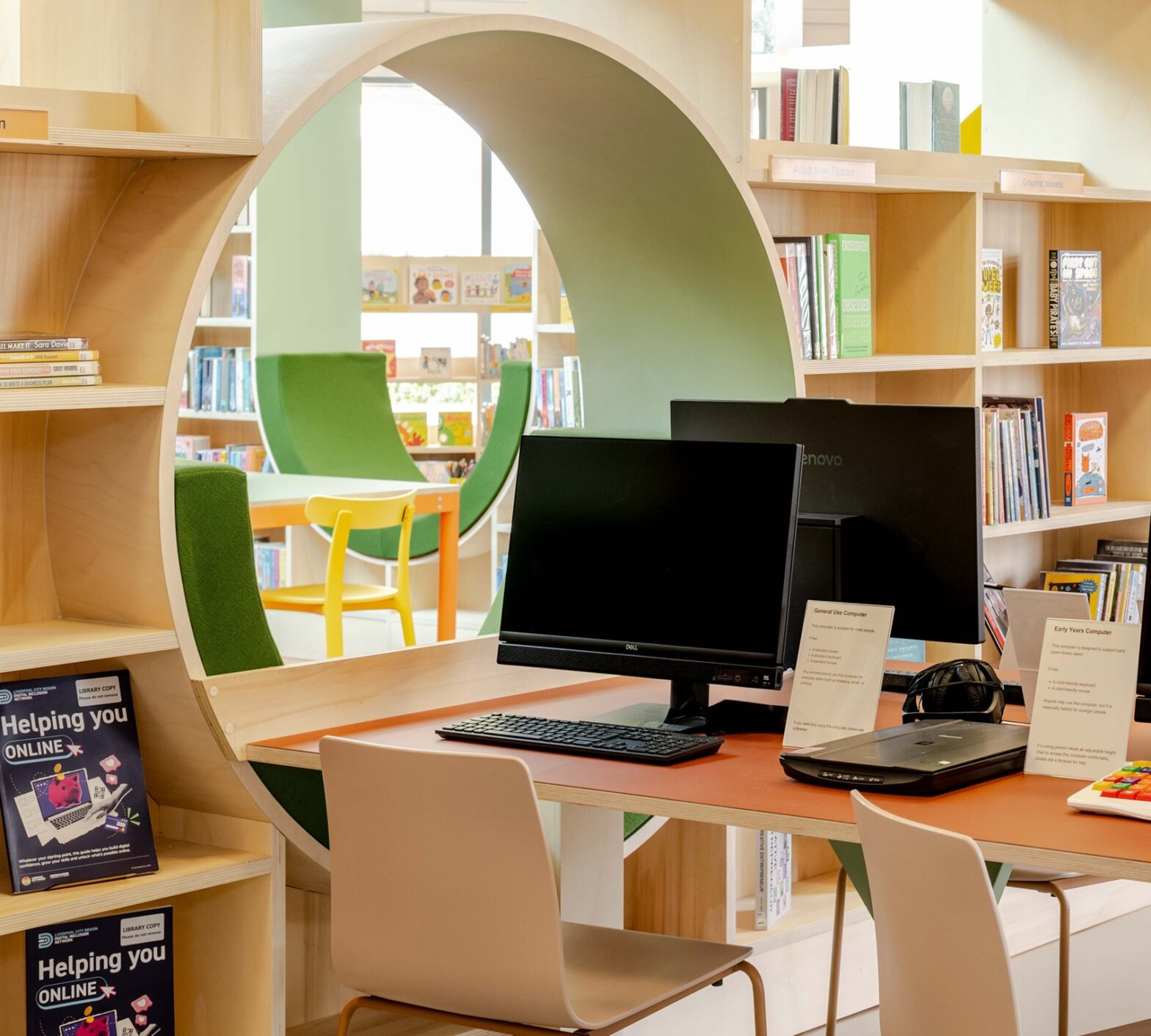
Staff are on hand to help too, so users can come in and use a computer to search our databases, and staff can help them find the stats or other information they need. Our subscription databases are constantly being updated, so users always get the latest information along with expert advice from our staff. It’s the perfect combination.
With thanks to Dave Gimson from the British Library for talking to us about the origins and growth of the BIPC network.
Further information on the BIPC network’s Reset. Restart programme is available here.